Note: Check out a visit to the Tian Tan Big Buddha for the first part of this journey.
 Despite staggering up and down 268 steps in sweltering Hong Kong humidity to enjoy the sight of Tian Tan Big Buddha at close range, a visit to the Wisdom Path is warranted. Separate from the Po Lin Monastery and only a short walk away past a teahouse, the path is marked by 38 wooden poles in the shape of an infinity (∞ - like a sideways eight) symbol. The Chinese characters written at the top of each pole represents the most popular of Buddhist scriptures, the Heart Sutra regarding a path to enlightenment.
The walk leads up a slight rocky slope weaving in a symbolic figure-8 past the various posts. Numerous folks bump into each other as eyes look skyward soaking in the scripts at the top of the poles rather than watching their path. From the peak of the tiny slope, hiking paths snake off in various directions including the sapping walk up Lantau Peak or Sunset Peak, the 70 kilometre Lantau Trail and shorter paths of a few kilometres to several other monasteries (Kwun Yum and Tsu Hing to name two) or the coastline of Lantau Island. I’ve never had a chance to undertake any of these other walks apart from a short stroll away from the main monastery area. The main gate beautifully frames the Big Buddha and is carved in Chinese calligraphy. The other side of the delicate gate is Po Lin Monastery, an impressive collection of halls, temples, gates, gardens and shops that bustles with people. It lacks the quiet and tranquil feeling that other Buddhist temples carry.
  The Main Shrine Hall is a riot of bright colours dripping in reds, golds and oranges. Three modestly sized seated golden Buddhas sit at its centre representing the past, present and future.
Incense burns continuously from a small urn outside the main hall while some escape from the crowds are possible in the gardens that include a peaceful lotus pond and an orchid garden. The monastery’s kitchen past the main shrine is packed with diners having purchased coupons for lunch. While the hall is chaotic and noisy with chatter, the vegetarian meals are filling and nourishing and include soups, rice, vegetables and deep-fried treats.
Tian Tan Buddha and Po Lin Monastery are a worthy day trip from the hectic centre of Hong Kong, especially when coupled with the spectacular Ngong Ping cablecar ride. Avoid weekends as it gets ridiculously busy and also the audio-visual themed shows that are right next to the unloading area of the cablecar. Try to get away from the temple complex and walk a short distance along the paths with wonderful sweeping hills to feel a little of the serenity that the monastery must have had before overrun with visitors.
Friday, November 25, 2011
The Chaos and Serenity of Po Lin Monastery (Hong Kong, China)


Friday, November 11, 2011
Discovering Big Buddha (Hong Kong, China)

 On a clear day, the Ngong Ping 360 cablecar offers superb views over the variety of Hong Kong’s islands, the Hong Kong airport and sparkling bays and waterways. Peacefully gliding between Lantau’s waterfront and the Tian Tan Buddha, a remarkable 25 minute, 5.7 kilometre cablecar ride takes passengers across a large bay and forested hills to Lantau’s most treasured sight.
 Craggy mountains form a backdrop as the scale of the 250-ton, 34 metre Buddha becomes apparent. The Po Lin Buddhist Monastery, a dizzying complex of colourful temples and buildings radiate across the valley below the Buddha while various dusty paths branch into the surrounding hills.
In the damp of Hong Kong’s tropical heat and draining humidity, groups of people stagger up a seemingly endless flight of 268-steps towards the towering Big Buddha (built in 1993). Some stride confidently while others droop over railing gasping for a little more air so they may continue their relentless trek. Some devout followers crawl patiently up the large staircase. Graciously and serenely seated on the crest of a hill in a familiar relaxed pose, Buddha appears to blissfully gaze over all of Hong Kong from his ideal vantage point. Under the giant Buddha are three floors of halls displaying various relatively uninspiring artworks and paintings associated with Buddhism. One room contains a valued relic - a small amount of the supposed cremated remains of Gautama Buddha himself. A grand bell intricately inscribed with Buddhist teachings and scripts rings 108 times every day (which is once every few minutes) symbolically cleansing 108 human failings. Around the Buddha are six devas or gods presenting various offerings that lead to nirvana and enduring happiness while the view from the top platform offers a wonderful panorama of Po Lin Monastery and the hills of Lantau Island.
While the area has an unfortunate palpable commercial feel to it, the surrounding walking trails provide a peaceful escape while the Tian Tan Buddha radiates an aura of power and tranquillity that acts as a balm against the intense crowds and general hustle and bustle of daily life in Hong Kong.
The journey continues with the Wisdom Path and Po Lin Monastery.
Wednesday, April 27, 2011
Three Gorges Cruise (China)
 guest post by Sanctuary Retreats
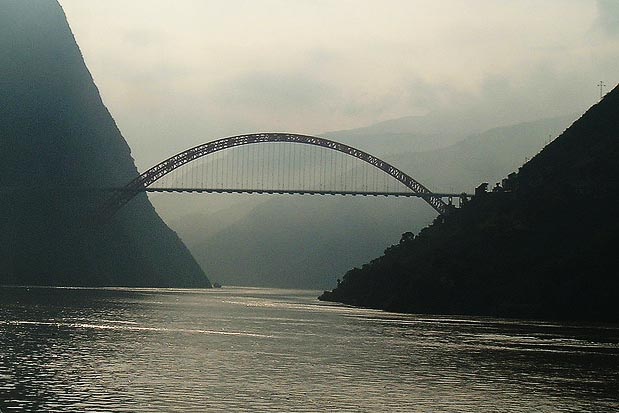
The Three Gorges area is one of the most impressive sites to visit in China. Formed by the Yangtze River it is, as the name suggests, split into three connecting gorges.
Qutang Gorge From east to west, Qutang Gorge measures five miles in total, running from Baidicheng all the way too the town of Daixi. The gorge is flanked by huge vertical cliffs, some thrusting thousands of meters into the air, the Yangtze River in between only a few dozens of meters wide forming a narrow gate way. With swash and rumble, the surging Yangtze River pours swiftly into the gateway. Looking up towards the tops of towering mountains along the gorge edge, only a narrow strip of clouds and sky can be seen by those on travelling on a luxury cruise down the river. Qutang Gorge is outstanding for its sheer scale and magnificence.
Wu Gorge Wu Gorge (Witches Gorge) extends 28 miles from the mouth of Daning River in the west to Guandukou of Badong in the east. The Wu Gorge is scattered with impressive peaks and lush surrounding mountains ranges. Its deep calm waters twist and turn their way down its length, allowing for those on China cruises to relax and soak in the surroundings. The twelve peaks of Wushan Mountain all rise up to meet the blue sky above. The mountains are formed of various fascinating shapes and among them is the breath taking Peak of Goddess. It raises high into the heavens, and towers over the Yangtze River. A protruding rock of the Peak has the shape of slim girl clad in a fine dress and often shrouded in clouds and mist.
Xiling Gorge Xiling Gorge measures 41 miles from Xiangxikou to Nanjinguan. Before the construction of the Three Gorges Dam, it was known for being the most dangerous of the three gorges to travel through. The whole Gorge area is covered with high mountains, gullies, shoals and reefs of various sizes. The best known shoal, Qing Shoal is formed by a collapsed craggy cliff. The gorge also comprises of many smaller gorges and never fail to provide fantastic and inspiring views for onlookers. Favourites include Kongling Gorge and Shadow Play Gorge.
Cruising down these gorges is an experience to treasure, as the natural sites afforded are surely one of the most unique on the planet.
Photo Credits: bridge, Qutang, Wu, Xiling