One of the finest day trips in Europe can be made via five forms of transport from Switzerland’s picturesque city of Lucerne to the forbidding peak of Pilatus. Named after Pontius Pilate, legend dictates that Pontius Pilate went into exile and committed suicide after the trial of Jesus Christ and had his body dumped into a mountain lake on Pilatus.
In medieval times, it was strictly forbidden to attempt to reach the Pilatus summit for fear of provoking Pilate's wrath. To strengthen the ban, a story abounded that once a year Pilate emerged from the jagged peak and appeared above the lake, dressed in ceremonial robes to unsuccessfully wash his bloodied hands, and anyone who saw him would die within a year. Today, the spirits and legends have calmed and Pilatus is regularly visited via the Golden Roundtrip (Goldene Rundfahrt). The tour starts with a suburban bus journey (#1) to Kriens before boarding a tiny gondola which takes quarter of an hour to whisk people almost a vertical kilometre to the mountain station of Fräkmüntegg. Switzerland’s longest toboggan run starts from here along with some lovely hikes but the Pilatus peak is reached by taking a larger cable car a further five minutes and another 600 vertical metres to reach 2132 metres above sea level and a stunning panoramic view across Switzerland.
 Unlike most of the numerous peaks in Switzerland, Pilatus stands isolated, a mass of grey stone grandly rising above Lucerne and offering panoramic vistas of much of Switzerland. The glistening Lake Lucerne sparkles below, its arms reaching into the verdant Swiss valleys and with the city of Lucerne sprawled along its shoreline. The southern and western views peer over the spectacular Swiss Alps, a veritable ocean of snowy peaks, creaky glaciers and craggy ridgelines including the majestic Mont Blanc and the inconic triple giants of Jungfrau, Monck and Eiger.
 Various trails (from a short circle around the peak area to a long trail all the way down the mountain) lead to other panoramic views with cute marmots occasionally nervously watching from their rocky vantage points. A mountain cut-through, ominously named the Dragon’s Walk after the mystical dragons that supposedly inhabit the rocky caves, leads to various short climbs. An historic and a more modern hotel allow folks to spend an overnight stay on this stunning mountain.
 Its location in central Switzerland as a stand-alone mountain peak makes it an ideal military point with clear vision to the Swiss borders and gun emplacements built into the mountain side. A small café serves (pricey) silky smooth hot chocolate and various tempting treats that bold dohle, imposing birds with a jet black sheen and yellow beak will gladly seize if your concentration wavers onto the view for even a second.
All walked out and relaxed, the journey down involves riding the world’s steepest cog railway. Praying that the brakes continue to function as they have since 1889 on this historic train and running for 4.5 kilometres at a gradient that reaches 48 degrees, the forty minute journey on the vivid red rail cars weaves its way down Pilatus to the shore of Lake Lucerne at Alpnachstad, where a 70 minute boat cruise across the beautiful Lake Lucerne (the subject of panoramic photos only two hours earlier) and back to the city.
The journey can be done in either direction and I strongly recommend that the trip is started early in the morning as the weather and clouds often reportedly roll in later in the day. While in Lucerne, make sure you check out both the moving Lion statue and the wonderful Chapel Bridge.
In the middle ages a brave monk and a handful of his intrepid followers clambered up Pilatus to confront the spirit of Pilate throwing rocks in the cursed lake. Pilatus stands tall among Swiss mountains, nout juts for its stories but for its spectacular vistas across Switzerland with wonderful alpine hikes and the adventure of being able to travel via boat, cog railway, cable car and gondola as part of the journey.
Note: Map courtesy of Pilatus Bahnen.
Friday, November 4, 2011
Pilatus Golden Roundtrip (Lucerne, Switzerland)


Wednesday, August 3, 2011
Top Five Rivers for a Cruise Holiday

guest post by David Collins of travelsupermarket.com
Go on a river cruise and you'll be able to take in a whole range of sights from majestic wildlife to fascinating cultural attractions from the comfort of a luxury boat. To find out more about five of the best river cruises in the world, read on.
Nile As the longest river in the world, cruising up the Nile can offer you a fascinating insight into ancient Africa. While the waterway crosses through a number of countries, it is perhaps most closely associated with Egypt and as you travel from Aswan up to Luxor you'll be able to learn more about the ancient civilisation.
One place that you should definitely stop by on your cruise is Thebes. Here you'll get the chance to explore the Karnak temple complex (photo), which is more than 2,000 years old. A wide range of monuments and tombs can be seen here; however, it is perhaps the precinct built in dedication to chief Egyptian god Amun-Re that will be most captivating.
Continue your journey up the Nile and you'll come across the Luxor Temple. Built to host the Festival of Opet, an ancient event which saw a statue of Amun-Re paraded down the Nile, here you'll also find an array of historic statues and attractions, including an effigy of Ramesses II and the Abu el-Haggag mosque.
Travel a little further north and you'll come to the Valley of the Kings, which contains more than 60 royal tombs, including that of Tutankhamen. From the comfort of your boat, you'll be able to see a wide range of wildlife, including small fishes and Nile crocodiles which grow up to 16 feet long.
Danube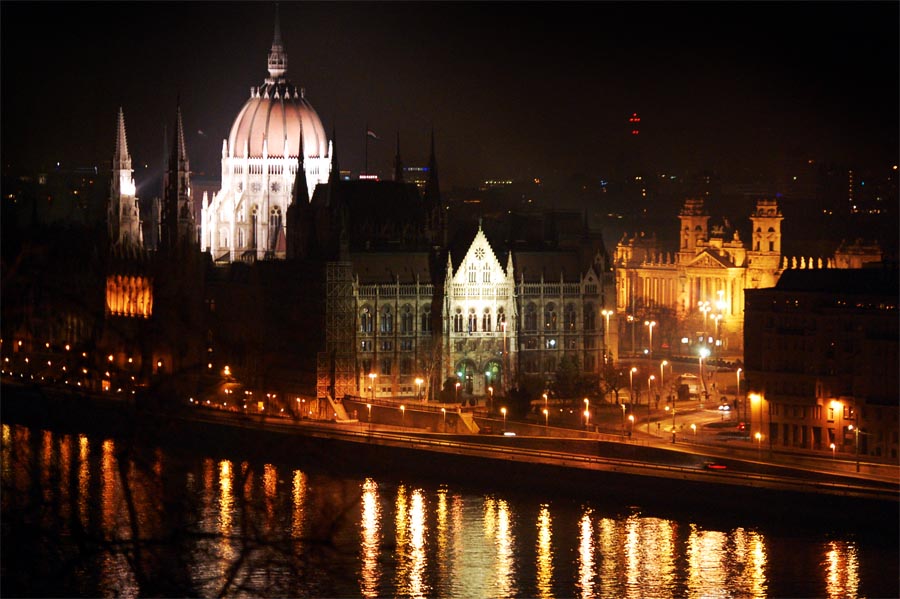 You may also want to go on a cruise of the Danube. As one of the longest rivers in Europe, this is a great way to see several of the continent's most charming countries.
Starting in Germany, you'll have the chance to explore the beautiful riverside town of Passau before continuing your journey to Salzburg, Austria. Visit the city's old town district and you'll be able to take in some beautiful Baroque architecture and learn more about composer Wolfgang Mozart who was born in the city.
Continue your cruise and you'll pass through Vienna and Bratislava before arriving at your final destination of Budapest, the Hungarian capital (photo). The city is set across both sides of the waterway and you'll find a range of captivating attractions in each.
These include the neo-gothic parliament building and the world's largest thermal water cave system, while the dozens of geothermal springs located here mean you'll find a range of spas where you can go for a soak.
The fact that the Danube crosses through so many countries means that you'll be able to see a wide range of wildlife, with white pelicans, beavers and tawny owls among the creatures you may have the chance to see.
More than 100 species of fish can be founded in the waterway, so look over the side of your boat for a chance to spot the Danube salmon, the Balkan loach and the Black Sea salmon.
Amazon Take cheap cruises along the Amazon and you'll be able to explore South America, getting a glimpse of some fascinating wildlife.
As one of the world's largest waterways, there's a range of countries you can take in on a tour of the river, including Ecuador, Bolivia and Peru. Your cruise is likely to pass through Brazil, where upon your cruise ship mooring up you'll be able to interact with local tribes and learn more about how they survive in the rainforest.
Among the many creatures you might get to see during your Amazon cruise are monkeys, tropical frogs and freshwater dolphins, some of which are an unusual pink colour, and you can also go on nature hikes and fishing excursions during your trip.
Mississippi Opt for a river cruise along the Mississippi and not only will you get the chance to travel on a traditional steamboat but you will also be able to explore some of the USA's most exciting cities.
Among the many interesting destinations that you'll be able to take in during your trip are St Louis, Memphis and Nashville, a city that is synonymous with country music.
However, it may be New Orleans that really catches your interest. A melting pot of different cultures, here you'll be able to sample Cajun and Creole cuisine before exploring the French Quarter and watching jazz bands.
Yangtze Booking a river cruise along the Yangtze gives you the opportunity to see some of China's breathtaking natural scenery, not least of all several spectacular gorges.
Perhaps one of the most popular stop-off points on a voyage of the waterway is the Chongqing Zoo. The largest zoo in south-west China, here you'll be able to see hundreds of different kinds of animals including pandas, giraffes and tigers.
Other sights to be seen include the Fengdu Ghost City and parts of the Great Wall of China, while you may also be able to explore the bustling cities of Shanghai or Beijing.
With so many fantastic places to explore, a river cruise can be a fantastic way of seeing the world!
Photo Credits: Karnak, paddleboat, panda
Wednesday, April 27, 2011
Three Gorges Cruise (China)
 guest post by Sanctuary Retreats
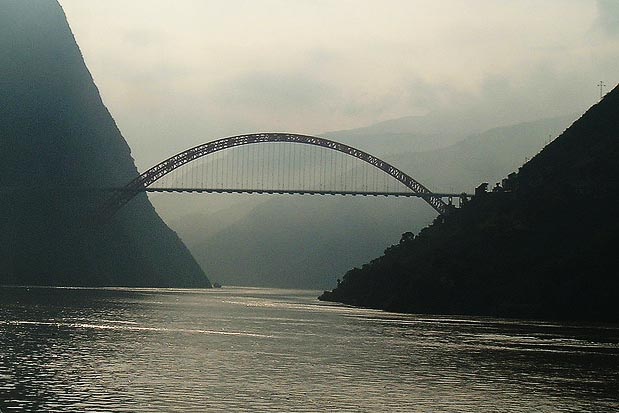
The Three Gorges area is one of the most impressive sites to visit in China. Formed by the Yangtze River it is, as the name suggests, split into three connecting gorges.
Qutang Gorge From east to west, Qutang Gorge measures five miles in total, running from Baidicheng all the way too the town of Daixi. The gorge is flanked by huge vertical cliffs, some thrusting thousands of meters into the air, the Yangtze River in between only a few dozens of meters wide forming a narrow gate way. With swash and rumble, the surging Yangtze River pours swiftly into the gateway. Looking up towards the tops of towering mountains along the gorge edge, only a narrow strip of clouds and sky can be seen by those on travelling on a luxury cruise down the river. Qutang Gorge is outstanding for its sheer scale and magnificence.
Wu Gorge Wu Gorge (Witches Gorge) extends 28 miles from the mouth of Daning River in the west to Guandukou of Badong in the east. The Wu Gorge is scattered with impressive peaks and lush surrounding mountains ranges. Its deep calm waters twist and turn their way down its length, allowing for those on China cruises to relax and soak in the surroundings. The twelve peaks of Wushan Mountain all rise up to meet the blue sky above. The mountains are formed of various fascinating shapes and among them is the breath taking Peak of Goddess. It raises high into the heavens, and towers over the Yangtze River. A protruding rock of the Peak has the shape of slim girl clad in a fine dress and often shrouded in clouds and mist.
Xiling Gorge Xiling Gorge measures 41 miles from Xiangxikou to Nanjinguan. Before the construction of the Three Gorges Dam, it was known for being the most dangerous of the three gorges to travel through. The whole Gorge area is covered with high mountains, gullies, shoals and reefs of various sizes. The best known shoal, Qing Shoal is formed by a collapsed craggy cliff. The gorge also comprises of many smaller gorges and never fail to provide fantastic and inspiring views for onlookers. Favourites include Kongling Gorge and Shadow Play Gorge.
Cruising down these gorges is an experience to treasure, as the natural sites afforded are surely one of the most unique on the planet.
Photo Credits: bridge, Qutang, Wu, Xiling
Friday, March 25, 2011
Three of the World’s Greatest Cruises

by Sanctuary Retreats
Cruising is an increasingly popular choice of holiday for millions of people. Cruising gives holiday makers access to a variety of amazing destinations that would be impossible to visit during a traditional hotel based break. On a cruise you can wake up to a new and exciting destination almost every day while still getting to enjoy all the comforts and facilities of the finest hotels. You will find cruises to take you to almost every corner of the world, but there are a few cruises that are unlike any other.
 Sailing along the Nile in Egypt is one such cruise. The Nile is a stunning river which has been the centre of a truly fascinating history and culture. On one of these luxury Egypt holidays you will get to see first hand the heartland of ancient Egypt and marvel at monuments and relics that are thousands of years old. Egypt’s rich history has left behind a wealth of artifacts and ruins that are just waiting to be explored and experienced. With such treasures on offer it is no wonder so many people become enchanted with Egypt.
 Egypt is not the only country to offer a rich and rewarding river cruise. China is home to vast panoramic landscapes and an enthralling history which has left many monuments and landmarks. China’s most iconic river cruise is undoubtedly the Three Gorges cruise on the mighty Yangtse which gives tourists an unparalleled Chinese experience. The Three Gorges offer some of the most beautiful landscapes in China and are certain to make for an unforgettable holiday.
 The Galapagos Islands are a group of islands unlike any other; it is little wonder they proved to be such a source of inspiration for Charles Darwin. These islands are located 605 miles off the coast of Ecuador, which is itself a truly amazing place. The islands often described as one of the Seven Wonders of the World which you may think is pure hyperbole but once you have seen the Galapagos for yourself you will realise it is completely justified. Great luxury cruises are available to tour these islands and allow you to see the unique flora and fauna which have fascinated and inspired so many people for centuries.
Photo Credits: flamingo, temple, three gorges, penguin
Thursday, March 25, 2010
Destinations for a Caribbean Cruise

Guest post by Ashley Jennings
A cruise can be a fun and memorable trip that should be experienced at least once. Although there are many possible destinations, the Caribbean remains one of the most popular. This is mainly due to the warm weather and pristine beaches. The Caribbean islands are also close together, which allows vacationers to see multiple locations during their trip. Along with the beaches, varieties of activities are available such as water sports, dining and the nightlife. St. Lucia, Martinique, and St. Thomas are three locations to consider visiting. If you are looking to book a cruise to the Caribbean with a fixed budget, you may want to consider using a travel agency such as Liberty Travel. You can still get great deals by planning the trip yourself, but be sure to research the different cruise lines to ensure you get the best price.
 Because of the popularity of Caribbean cruises, many cruise lines travel to the Caribbean Islands. This helps reduce the stress of planning a cruise, since many vacation packages should be available. The temperature is also warm year round and it is usually between 75 and 85 degrees.
St. Lucia is a volcanic island that is well known for its natural beauty. The landscape of St. Lucia consists of rain forests, mountains, volcanoes, and sandy beaches. This island is also a popular honeymoon destination, where you can relax at your own secluded beach.
 Martinique is considered one of the most beautiful islands in the Caribbean. The island of Martinique is like a smaller version of France. This beautiful island consists of a landscape with black sandy beaches, high mountains, and rain forests.
 St. Thomas is part of the US Virgin Islands and US citizens do not need a passport. This island has many benefits for the cruise ship passenger, including some of the best shopping destinations. You can also go scuba diving, fishing, or you can relax on the beaches during your stay at this island. St Thomas is one of the busiest ports in the world, and because of the popularity of this cruise destination, you are sure to find some discount cruises to fit your budget.
A cruise to the Caribbean can provide you with the perfect atmosphere to relax, shop or to enjoy the warm weather. If you are planning a trip to the Caribbean, you may want to consider visiting the islands of St. Lucia, Martinique, or St. Thomas.
Photo Credits: St Thomas, St Lucia, Martinique, St Thomas Night
Sunday, July 20, 2008
Living on Stilts (Ganvié, Benin)

Precariously balanced in tiny wooden canoes called pirogues, we poled and paddled a few kilometres around the stilt villages of the tiny West African nation of Benin. These unusual travel wonders were created over three hundred years ago when the local tribes moved into the shallow Lake Nakoue to avoid capture and enslavement by the dominant Dahomey people whose spiritual beliefs forbade them from venturing into the lake.
As we approach, the awkward wooden and bamboo huts perch on posts only a couple of yards above the lake surface, their thatched roofs sitting atop like unkempt hair. Most of the men are fisherman. Fishing is a combination of traditional throw-nets along with a carefully managed system of fencing off parts of the lake with local reeds. The fences are moved and the areas reduced to corral the fish into small areas to provide an easy and ready source of food. The extra fish is taken to market and traded for other necessities.
These water pens are like fields of a farmyard, taking large expanses of the lake leaving narrow roads or channels for navigation around the lake. It is quite an operation without the need for bullocks, ploughs and planting. Meanwhile the women go about their every day life as if they were on living on land, tending to their family’s laundry, meals, childcare and the typical daily chores of home life. Often hidden under oversized hats, the women trade fish, fruit and vegetables with other villagers treating their pirogue as a veritable floating market. Few houses are connected with walkways so any business away from their hut requires paddling to another wooden building.
 By far the most popular of these stilt villages is Ganvié which to my mind is far too touristy to be enjoyable, or even comfortable. There is an ugly tourist shop and café while the children clamber around yelling “yovo, yovo” (which loosely translates as "stranger" or “white man” in a friendly way) and demanding “cadeaux, cadeaux” (gifts). Some try to sell primarily tourist tat at inflated prices, though some of the local colorful patchwork is impressive. Others pose for photos (handstands in the pirogue is a popular trick though you have to admire their balance given that sitting in a pirogue is enough of a feat) and ask for money in return. That being said, the funds they collect from visitors have built Ganvié up and undoubtedly improved the health and well-being of the villagers.
  A number of other far less visited villages also populate the lake and have not yet acclimatized to the wealth of visiting tourists. These small settlements were far more pleasant to spend time in, with the villagers going about their every day business, provided you can keep your travel and photography habits respectful and quiet (many of the women do not like to be photographed).
  Ganvié is sometimes described as the Venice of Africa which gives a very false impression. However, it is an interesting insight into an unusual life bred from personal safety several centuries ago. Don’t get your expectations too high for a truly cultural experience but enjoy Benin’s stilt villages as an African travel wonder.
Footnote
The aerial photo (lead photo) is sourced from here.
Tuesday, July 1, 2008
The Great Congo River Journey (DR Congo)
 This trip was undertaken in 1991 when the country was called Zaïre, the river was called the Zaïre River (and even the currency was the Zaïre). Today it is called the Democratic Republic of Congo (DR Congo) and the river has returned to its more familiar name of the Congo River. I have no idea whether this remarkable boat trip continues today. Even if it does, it would be difficult and dangerous for foreigners to travel through DR Congo as I did – a great tragedy indeed.
 Nothing quite prepares you for one of the world’s great travel adventures – riding the Congo River Boat upstream from the capital, Kinshasa to Kisangani over a period of around two weeks. A seething mass of humanity boards – couples, families, luggage, market stalls, animals (including crocodiles, monkeys, pigs, goats, tortoises, chickens and more), radios / music machines, crafts and many things that defy description.
The river boat is a steamer lashed together with a number of barges. Even amongst the mayhem, travel comes in three classes – first class (deluxe with nice comfortable rooms), second class (rooms with four bunk beds) and third class which consists of space on the deck somewhere, all classes including two surprisingly nutritious and tasty meals each day.  The boat departs and the party begins. African rhythmic music blares from every music box and radio for 24 hours a day. The untiring passengers and their brightly colored clothing sway to the rhythmic beat for hours at a time while others tend to the important business of shopping at the informal markets setup by the more entrepreneurial folks. Seemingly everything is for sale – pots and pans, torches, clothing, food, batteries, strange carvings and more.
The late afternoon (evening) meal time is a form of organised bedlam with crowds of people like peak-hour in a Friday afternoon bar. On the menu are mounds of rice with a tasty stew or sauce based on one of the menagerie of animals boarded in Kinshasa. When the meat runs out, another is selected and slaughtered – at least you know the meat is fresh. Over the days, more traditional western meats like chicken and pork is mixed with goat, monkey and crocodile. After a couple of days, I stopped asking – somehow it seemed better that way. Every day, the kitchen performs miracles and gets everyone served, most balancing their bowl or plate on their knee or a flat part of the boat. A few smarter ones sneak up to the top deck.
Some peace can be found on the top deck – a flat area where you can watch the world go past or enjoy the dazzling evening sky unhindered by the typical city lights back home. In the river darkness, the Milky Way really does appear as a creamy heavenly highway. The music is a little more distant up here and the top deck appears accepted as a more tranquil area – a haven from the hurly-burly of river boat life. With a decent blanket, this is as good a place to sleep as any – the gentle speed of the river boat creating enough breeze to keep the insects at bay. As time soaks by, we pass a number of river-side villages with their wooden and straw huts. For many villages it includes an energetic paddle on their pirogue (a wooden canoe) to tie up to the main boat for a session of trading their goods for other needs of the village. Others simply hitch a ride upstream. The bartering is vigorous but all seem to leave contented with a broad smile and a gentle handshake. Some on board seem solely to take the river boat to trade with the various villagers along this aqua highway. With the bartering complete, the pirogue unties and simply eases its way back downstream back to the village, carefully balancing their new goods in the small wooden craft, avoiding capsizes from the wash of the river boat. For many villages, it is their sole contact with the outside world with no road network at all and no other village within walking distance.
  In the end it seems so disappointing to arrive at Kisangani as mayhem ensues with the disgorging of the many hundreds of passengers – the way of life on the river, the temporary friendships formed, the spirited bartering in the river boat markets, the energetic music and dancing, the menagerie of animals and the waves from the passing villages left a great two week escape for the visitors and a continuation of life for the locals – many undoubtedly bound for the return journey the following day.
Surely the vibrant spirit and color of the Congolese people, the Congo River and its river boat is one of the world’s great travel wonders. We can all only hope that DR Congo can one day return to a more peaceful and normal life and that this magnificent waterway can again be used for the benefit of all that live near her.
Tuesday, May 13, 2008
The Reed Islands (Lake Titicaca, Peru)

Straddling Peru and Bolivia, the travel wonder of Lake Titicaca (with an area of over 8,000 square kilometres or 3,000 square miles) lies at a oxygen-deprived 3,800 metres above sea-level (12,500 feet) making any activity for a visitor beyond a slow stroll quite a feat of endurance. For hundreds of years, the Uros people have lived peacefully on a handful of small islands made solely of reeds dotted within this huge lake.  Nearly everyone, locals and visitors alike, seem to chew heartily on coca leaves, supposedly to combat the effect of altitude sickness. Though there is scant medical evidence, this South American equivalent of tiger balm also holds claims to combat the cold, fatigue and various other ailments.
Living on a reed island brings some interesting new chores and challenges. Everyone seems to be fairly active either working reeds or preparing food. The leathery skin on the hands of the island women shows the years spent crushing grains with large smooth rocks.
As the reeds slowly rot away in the lake’s waters, there is an endless cycle of collecting, drying and spreading the reeds to build up the island. Fortunately the lightweight reed huts can be easily picked up and moved, a new reed floor being laid every few days. Exotic, viking-like long boats with giant dragon head fronts are also constructed from reeds and are used for transportation between the neighboring islands. Small stick and reed pens on the edge of the islands house fish which forms the staple diet of the Uros.
The Uros unashamedly encourage visitors, charging them for rides on their boats, to climb their watchtower (you guessed it, made of reeds), for souvenirs such as their colorful clothing and model reed boats and for snapping photos. This money assists them in buying other goods from the mainland.
The whole experience may feel somewhat voyeuristic but a few hours on the island provides a fascinating insight into this unique travel wonder, a chance to view a lifestyle so completely different from our own.
Footnote
Also worth a visit (and an overnight stay with a local family) is Amantani or Taquile Islands which have sustained subsistence farming families for generations. You may even get a chance to enjoy the Peruvian delicacy of cuy (guinea pig) which naturally enough tastes like chicken!!